Poshan Growth Saathi simplifies child growth tracking for field workers
Poshan Growth Saathi, from Quickutil Apps, is a mobile tool to help frontline health workers track child growth and nutrition. By entering age, weight, and height the app calculates WHO Z-scores and instantly classifies children as Normal, Stunted, Wasted, or Underweight, removing manual chart lookups. It stores multiple child records, shows color-coded indicators, supports metric and imperial units, and optimizes for low-end Android devices for field conditions. Designed for Anganwadi workers, ASHAs, and community volunteers in India, it speeds field assessments and referral decisions.
Performs the standard Z-score calculations used in routine screenings
The app computes anthropometric indices used in public health screening, including Z-scores for Weight-for-Age, Height-for-Age, and Weight-for-Height, and assigns nutritional categories according to WHO Child Growth Standards. That calculation set removes the need for manual reference tables during a session, letting a health worker complete a numerical assessment at the point of measurement and record the classification immediately for triage or follow-up.
Works in low-connectivity field settings with offline entry and sync options
The design supports data entry in the field, performing local calculations without a constant network connection; synchronization and certain updates require internet access. The app targets Android devices with modest hardware specifications, which reduces device requirements for deployment. Teams should plan periodic synchronization windows so entries created offline are backed up and shared with central reporting systems when connectivity is available.
Interface choices reduce training time but language support varies
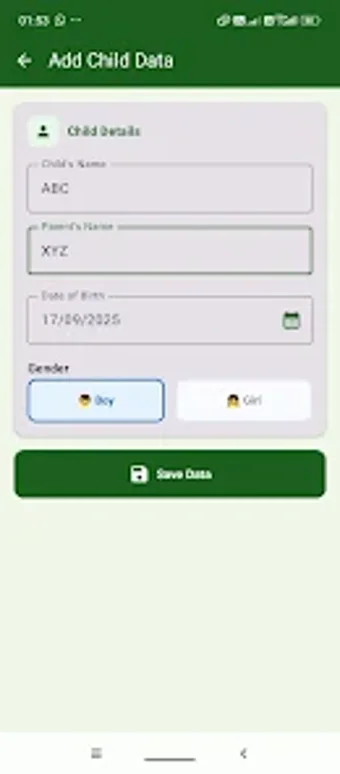
Controls emphasize icons and visual cues to speed data entry in busy or low-literacy environments, and color-coded indicators guide rapid identification of at-risk children. The interface choices lower the onboarding barrier for community workers accustomed to paper registers. Language offerings are not uniform across versions, so local teams may need to check availability or pair the app with brief training in the preferred regional language.
Built as a practical utility for public health teams rather than a standalone clinical record
The app is tailored to the Poshan Abhiyaan workflow and the Indian public health ecosystem, intending to assist screening and referral rather than replace clinical electronic health records. The developer focuses on utility-driven mobile tools for field data tasks, and the app has gained steady use within the public health community. Departments should adopt data-handling routines that match local health guidelines when storing beneficiary information captured by the app.
Practical choice for frontline workers who need reliable screening
The app is a pragmatic option for Anganwadi workers and community health volunteers who need fast, standards-based nutritional screening tied to national programs. Expect basic offline use but plan for periodic synchronization to preserve records under local policies. As a pro tip, set a daily sync routine and follow departmental guidelines for beneficiary data handling. It suits teams that run regular child-growth monitoring across community settings.
Pros
Automates WHO Z-score calculations for weight, height, and age indices
Stores multiple child records for longitudinal tracking
Icon-driven interface lowers training time in field settings
Supports both metric and imperial measurement units
Cons
Some synchronization features require internet access
Language support varies between versions
Does not mandate secure storage; follow local data guidelines
Laws concerning the use of this software vary from country to country. We do not encourage or condone the use of this program if it is in violation of these laws. Softonic may receive a referral fee if you click or buy any of the products featured here.